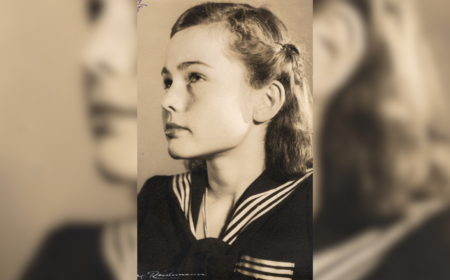
When Melissa was in high school in Santa Monica, Los Angeles, she discovered that she excelled at swimming. She was also good at volleyball and basketball, but nothing special, even though she was the tallest person in the school. Sports helped her gain more confidence.
“Swimming sort of opened up a lot of things. I became, sure, smart, I was brainy, everybody knew I was the gold pin kid. I knew [that] every quarter I would get the little gold pin, meaning the highest [grade] average. But I wasn’t popular. It was not that people disliked me. I was just not popular. Then I discovered this skill called swimming and started winning trophies for the school and they said, ‘Well, why don’t you come out for basketball? Why don’t you come out for volleyball?’ and I became the vice president of the Girls Athletic Association. It developed my personality,” she said in her ADST Oral History.


“Over the years I have been asked many times how, in the conservative fifties (when there were retarded views concerning women), I was able to forge ahead with a successful professional career,” she wrote in a memoir in 2018. “I have given this a good deal of thought and have come up with an unusual conclusion.
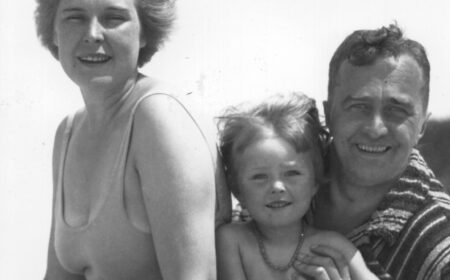
For openers, a few facts. I reached my full height of 5 feet 10 ½ inches (1.80 meters) at age 13. And I weighed 99 pounds (45 kilos), a walking skeleton. I was raised in Hollywood when my mother, Miliza Korjus, a well-known coloratura soprano singer, was brought over from Europe in 1936 by movie mogul Irving Thalberg to make a film. She could not speak a word of English and was 40 lbs. overweight. Two years later the film ‘The Great Waltz’ was released and she was a glamorous, gorgeous movie star. Over the years, growing up next to my mother, I felt like an ugly duckling. Then there was a very messy divorce which was reported in the newspapers, and I suspected that everyone had read. Yes, I was smart and had very good grades, but I was extremely shy and suffering from a severe inferiority complex.
However, during high school I had taken up swimming and became rather good at it. For one thing, thanks to swimming I had put on 30 pounds (13 kilos) of muscle. In addition to competitive swimming, I was also doing water ballet.” She even won a prize given by Esther Williams, who was the world’s most famous water ballet star.
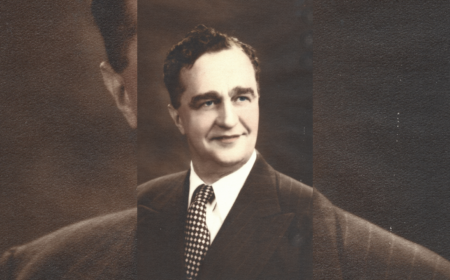
She was determined to get out of Los Angeles. She did not want to get married soon, because of the traumatic experience of seeing her parents fight and then divorce. She did not want to become a Hollywood star and live in the shadow of her mother, who was not her role model. She tried to become a flight attendant but was turned away even before an interview because she was too tall. She was attracted to the exotic side of missionaries working in far-off places, but she wanted something more. The US diplomatic corps, known as the Foreign Service or State Department, best fit what she wanted. And her father, Kuno Foelsch, taught her that women could do work just as well as men.
“I had big dreams,” she wrote in a memoir. “I wanted to become a diplomat. I had read about those so-called ‘pinko’s’ in the State Department during the McCarthy era and thought they had wonderful careers, traveling about the world carrying out US foreign policy. That was for me! But how would I ever become one? I had heard about a School of Foreign Service at Georgetown University in Washington, D.C., but at that time my father had no money to send me far away to study.”
Melissa graduated from high school in Santa Monica neighborhood, Los Angeles, in 1950 and enrolled in Mount Saint Mary’s College, in West Los Angeles. As much as she liked the college, she had no intention of graduating from there. She wanted somehow to get to Georgetown. But she had no money.
“Through my water ballet activities,” she wrote in a memoir, “I learned that a show was being put together that featured water ballet to tour in Europe. I auditioned and was accepted for the Aqua Parade of 1953. But I found out shortly thereafter that in order to go on to Europe, I would also have to learn to dance and perform as a swimmer and dancer at the Desert Inn in Las Vegas. Swimming was OK, but dancing in a skimpy outfit on stage in front of those people was more than I could bear!”, she admitted.
Her Las Vegas manager noticed that she wasn’t comfortable with this. He told her, “Next time you go out on stage, I want you to shout to the audience ‘Look at me, all you lucky people!’. Don’t worry about the audience hearing you because the music will be so loud. I’ll be watching you close by to make sure you do it.”
Melissa did just as the manager demanded, and this gave her great confidence on the stage.
“So, I grit my teeth and learned to do hitch kicks in shoes with three-inch heel and platforms. On stage in my sequined costume and a headdress with two feet of feathers, I must have been over eight feet tall (2.4 meters). But I was in the back row …. Thank goodness! The first few nights in Vegas were awful for me. It turned out I was an excellent dancer, held up as an example during rehearsals, but inside I was wrestling with my shyness and timidity. Two shows a night and three on Saturdays for six weeks finally solved my problem.
I don’t remember exactly how long it took – maybe a dozen or more appearances on stage – but I remember very clearly the feeling of blossoming self-confidence: I enjoyed dancing, I enjoyed the music, and I started looking at unknown faces in the audience and smiling at them. God! It felt so good to be rid of what was holding me back!! How did I gain this self-confidence? I think it was the determination to go forward with my plans, even though I had to do something I dreaded terribly to get there. Looking back on that experience, it adds up to determination plus courage equals success. In my case, it came about in a rather unusual way.”


This was big show business. The show was headlined by Johnny Weissmuller, a muscular actor and swimmer who would play Tarzan in the movies.
The new European show, Aqua Parade, left for Italy on July 13, 1953, without the Tarzan actor. It performed in Torino, Rome, Basel, Dortmund and Berlin, among other cities. There was ample media coverage.
Read Aqua Parade insert in Torino newspaper, August 5, 1953
Read Aqua Parade booklet for Dortmund, November 1953

Six months later the show went bankrupt, and most of the girls were repatriated in December “as destitute Americans by the State Department – not exactly how I had planned to meet the State Department!” she wrote in a memoir. (Five years later, when she joined the Foreign Service, a lady from the State Department gave a presentation to the entering “class” of new officers about repatriation of destitute Americans. It was the same official who had handled the Aqua Parade girls. Fortunately for Melissa, the lady did not recognize her.)
Melissa didn’t go back with the other girls. On the Aqua Parade tour, she had started dating the manager, an Italian by the nickname of Tonino (no full name is available) and lived with him during 1954 in Milan. It was her first real experience of having a boyfriend. He was 22 years older and very understanding of her past. This experience healed her from the abuse that she had suffered as a child. However, he was very jealous and that led her to leave him at the end of the year.
She went on with her plans, totally unaware that neither Georgetown University nor the State Department had any interest in women students or officers. But she now had determined self-confidence, and it stayed with her all my life.
Melissa was able to do water ballet movements for many years – even when she was Ambassador to Zaire in 1991.
She maintained contact with her Aqua Parade friends for decades.
Click here for more.