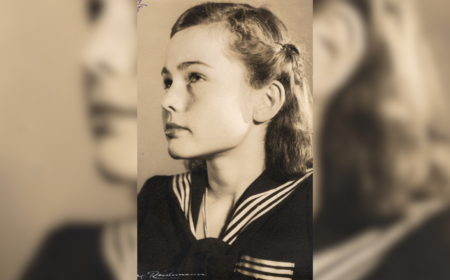
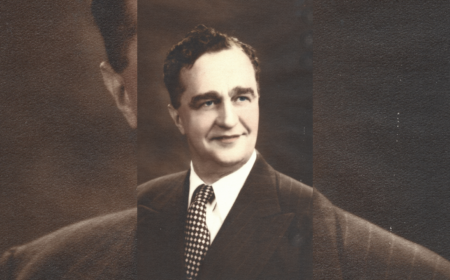
The following quoted text is from an e-mail that Melissa wrote in 2015 to a close friend. It contains excerpts from the ADST Oral History website.
“When I arrived in Zaire in May 1991 as the new U.S. Ambassador, the country was beginning to organize itself for a process of democratization. In 1990, President Mobutu had begun to succumb to international pressure to give up the one-party state rule and democratize. In September 1991, the army mutinied because it had not been paid in several months and went on a looting and torching spree. We evacuated over 3,000 Americans from the country, many of them missionaries from the interior of the country. French and Belgian military forces arrived to restore order. The Embassy staff – which was the largest American Embassy in Africa – was reduced to minimal size and all dependents left, obviously including my husband.
Once order was restored in Kinshasa, a National Conference was organized in early December 1991 to discuss how best to proceed with an eventual democratization process. Archbishop Laurent Monsengwo of Kisangani was selected to chair the National Conference, which was also supposed to draft a new constitution to be approved by national referendum. There were several thousand delegates to the National Conference, representing Zaire’s nearly 40 million people and some 200 ethnic groups.
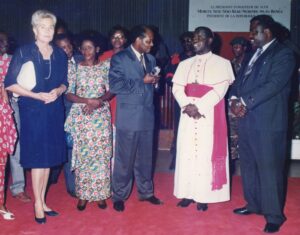
But by the following month, it became clear that a real change of government was sought by the National Conference, who were intending to elect Étienne Tshisekedi, founder of Zaire’s only opposition party, as prime minister. Mobutu suspended the Conference and thereby encouraged strong support for the opposition party.
Protesters planned a March of Hope for a Sunday. Leaders planning the March of Hope came to see me at the Embassy several times asking for details of the US non-violent civil rights protests that Dr. Martin Luther King, Jr. had organized. They came into the library [at the embassy] and they read about King and so on. It was entirely peaceful. It was church-based. In other words, the demonstrators would all collect in churches, Episcopalian, Presbyterian, whatever. I gave them as much information as I could.
On the given Sunday, I gave strict instructions to all remaining Americans in Kinshasa not to leave their homes. Together with a few of my colleagues, I spent the day at the embassy. We were visited numerous times by bleeding clergy and protesters who described with what brutality the non-violent protest was being suppressed. While there were protests in other cities in Zaire, the estimate in Kinshasa was of several tens of thousands of protesters.
People started coming in, priests all bloodied up with torn cassocks. Phone calls. You knew something awful was going on but you didn’t know exactly what. Then the political counselor was there, and at about four in the afternoon, I said, ‘All right, put all the flags on the car, on the Cadillac, we are going to the hospital. I don’t know if we’re going to get in or not. But we’re going. I want to see what’s happening.’
We drove up to the hospital. I thought they might try to stop us. No, they let us in. We went into the hospital. I was overwhelmed with people. I talked to the wounded, those who wished to speak at all about anything. I saw the injured and, from those who spoke French, heard their stories. We went down to the morgue of the hospital and saw the victims with fresh trauma wounds who did not survive.
And I had my own report to make. I happened to have a meeting with – we had what we called a troika, the Belgian, French and US [ambassadors] – President Mobutu the following day. But I had a firsthand report of what happened, not just sitting and listening to phone calls. Then I reported it to Washington. They asked me, ‘Did they march and so forth?’ This was never shown on television, but a lot of people knew.
A few weeks later, when the Rodney King riots occurred in Los Angeles, Prime Minister Nguz Karl-i-bond, who was responsible for the brutality of the suppression, had an announcement on local TV, that he had not instructed the Zairian Consul in Los Angeles to check hospitals for wounded Zairians! My phone started ringing off the hook apologizing for the prime minister.
During this period, I also received a phone call from Archbishop Monsengwo. He was terrified, saying that he would be killed, that his home was surrounded by armed men.
I asked the political officer to accompany me, got into the official Cadillac once again with the flags flying (there are two flags: one is the US flag, and the other is the official ambassador’s flag) and drove to the archbishop’s home. There were armed men outside, but nobody stopped us, and we went in and found the archbishop hiding and extremely nervous. We stayed with him for several hours and I offered to take him to the Embassy, but he refused. The armed men left and so did we.
Later, I received instructions to deliver a very tough message to Mobutu to reconvene the National Conference. Mobutu was on his large boat, far up the Congo River. He sent his helicopter to pick up me, my deputy and my diplomatic security agent, sent by the State Department after the army mutiny. My meeting with Mobutu was on a one-on-one basis, as I had requested. Mobutu became upset and threw his leopard cap on the crystal coffee table. As a storm was approaching, we had to leave on the helicopter.
The ride back is described in a (…) book Taking Up the Sword written by [Randall Bennett,] the security agent. Not only were we very low on fuel but could not find the helicopter landing spot in the pitch-black darkness as there was a power outage in Kinshasa. (…) One of the other security agents, who was concerned by the power outage, raced to the helicopter landing [and] signaled us with a flashlight. Our landing spot was next to the extremely dangerous rapids of the Congo River. We were saved from landing in the rapids by a pocket-size laserlite flashlight.
The National Conference was reopened [in April 1992].”
The reopening marked a popular victory against Mobutu’s authoritarian control, showing the strength of civil society and opposition movements. It also set the stage for Zaire’s attempted transition to multiparty democracy, though instability and Mobutu’s resistance continued to undermine reforms.
“It was Archbishop Monsengwo who gave me the lovely nickname ‘Tantine’ (Auntie) and spread its usage among Zairians,” she recalled. Monsengwo in 2010 became a Cardinal and in 2013 was appointed by Pope Francis to advise him on revising the Apostolic Constitution on the Roman Curia.
During the period that the National Conference had been shut down, a reader of Le Soft de Finance, a local publication, sent in a letter about how active Melissa had been, entitled “Melissa wants her President”.
In her talk on the ADST Oral History website, Melissa gave details about the origin of her nickname and her role when the National Conference opened.
“As a result, and I spoke out very frankly, I acquired a wonderful nickname, a sobriquet which I shall treasure for the rest of my life. Tantine. Auntie. Now at first I said, ‘Tantine? Is this because of Uncle Sam and I’m a woman, is this Auntie Sam or what does this mean?’
I mean I speak French, Tante is an aunt. I said, ‘But why a tante?’
‘Oh, no, but don’t you know the expression Tantine? [Presumably Monsengwo said this.] Tantine may or may not be related to you by blood as an aunt should be. A Tantine is a senior woman in the family to whom you come and tell your troubles to and get good advice.’
And one of the most wonderful moments of my entire career was when this National Conference had reopened. It had been closed by Mobutu for some time, and the US had applied an enormous amount of pressure, and I made damn sure that everybody knew that we were doing this. And then the National Conference was reopening, and the diplomatic corps was asked to attend, and they had a special section down there at the front and as usual, I’m late. I pull up in the official car with all the flags flying. I could see all the other ambassadors and their flags, and their drivers are sitting over there, and I go running up the stairs and I’m trying to figure out which door to go in.
‘Where is the diplomatic section?’
‘That way, that way, madam.’
I start walking, I start running almost, walking fast down this aisle to get to the front. And then I hear applause, and I thought, ‘Oh dear God, Monsengwo is coming and I’m in front of him. I start looking around and there’s no Monsengwo and I see people looking at me and clapping “Tantine, Tantine, Tantine.”
Well, it didn’t take me long, to stop running down the aisle and to absorb fully for the US government and for Melissa Wells in person. I acquired a very regal step coming down the aisle. I sat down in my proper place. Of course, my diplomatic colleagues are saying, ‘My God, what an entrance you made.’ Never mind. Never mind.”
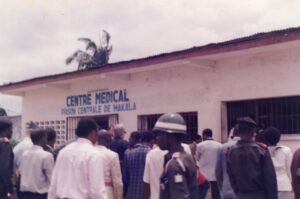
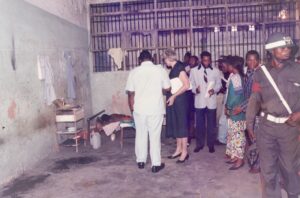
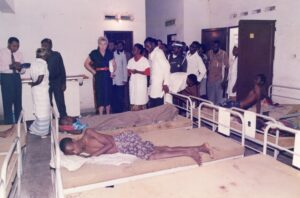
On October 30, 1992, Tantine made another visit to people who had been protesting in favor of democracy. This was to the infamous Makala prison in Kinshasa. Here are photos of her visit. Her visit generated both support and criticism – and a letter from an NGO defending her against an editorial in a pro-Mobutu newspaper.