
Los Angeles and Hollywood, 1936 to 1941
Melissa arrived in Los Angeles in 1936 because her mother, Miliza Korjus, had been hired by Metro-Goldwyn-Mayer (MGM) to be the lead singer in a major film production, The Great Waltz, which came out two years later. The movie, which still can be seen today, is about Austrian composer Johann Strauss.
For more information about Miliza Korjus, click here.
The musical was a tremendous success. It won an Academy Award, commonly known as an Oscar. Miliza Korjus was nominated for an Academy Award as best supporting actress (Academy Awards weren’t given for singing). The family was catapulted into the world of Hollywood movie stars and European intellectuals who had fled Nazi Germany. They lived in the fancy neighborhood of Pacific Palisades, on D’Este Drive. Melissa, who arrived at age four, went to the Brentwood Town and Country school, where she quickly learned English and played with the children of movie stars – and some children who later would become famous, such as Jane Fonda.


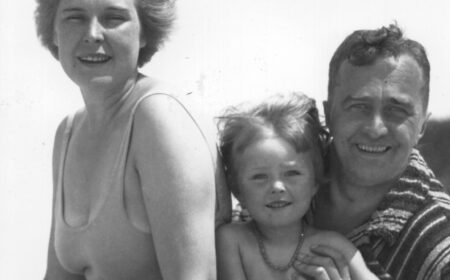
This was the happiest part of her childhood. Her parents lived together in peace.
One night in May 1940, Melissa woke up in her room because she heard her mother scream. She looked around and her mother was nowhere near her. She went to her nanny, Lia, who she had known since being a baby in Berlin, and told her about the scream. Lia said Melissa’s parents had gone out and that everything was alright. Yet Melissa could not go back to sleep. Then the phone rang, and Lia answered it. She switched from speaking German, which is what the family spoke at home, to Russian, which Melissa could not understand well. The phone call was from Melissa’s father to tell Lia that he and Miliza had been in a serious car accident on Sunset Boulevard and that the movie star was in the hospital. One of Miliza’s legs had been torn apart. The surgeons managed to stitch it together, but this meant that she could not do any more Hollywood movies.
From then on, Miliza’s career was centered around performing at opera houses.
Years later, in her Oral History, Melissa said “It wasn’t until I grew up and was an adult myself that I realized what this must have meant to my mother. (…) She [had been] dancing and whirling [in the Great Waltz] and here she has to come out with a cane on stage. (…) She had a chance to do a series of personal appearances in Mexico, and then go to Cuba, and supposedly down to Rio and Buenos Aires as well. And she took that, because she said, ‘I’ll get my confidence back.’”
In 1941, her mother signed a contract with a Mexican radio station to sing at opera houses around that country. That year, the family moved to Mexico City.

Mexico 1941 to 1944
Melissa’s mother, Miliza Korjus, in 1941 signed a contract with a Mexican radio station to sing on the radio and perform at opera houses around the country. She also starred in a Mexican musical, Caballeria del Imperio, with several of the major Mexican movie stars.


The family moved from Los Angeles to Mexico City in 1941. Her father, Kuno Foelsch, stayed a while in Mexico and then moved back to Los Angeles. The nanny, Lia, whom they’d known for almost ten years, stayed in California.
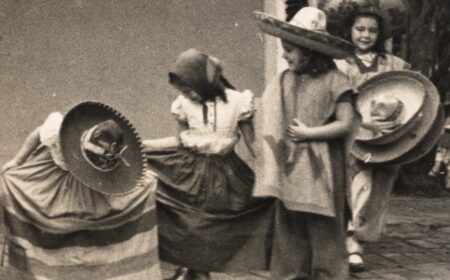
Melissa would speak German with her mother and Spanish with her friends, who were a mixture of Mexicans and Europeans. For example, she played with the children of the house servants and with the son of the Austrian conductor of her mother’s orchestra. She forgot some of her English but would read books in that language. She accompanied her mother on all her concert tours around Mexico and would appear in newspapers with her or even by herself. Here are videos of Melissa speaking in German and Spanish.
Read Miliza Korjus distributed autographed photos in Mexico
Read El Norte newspaper of Monterrey interviewed Miliza Korjus with Melissa by her side, 1942
Read Mexican tabloid Radiolandia featured Melissa on the cover, 1943
“In Mexico there was no compulsory education in those days, and we lived quite a way outside of town in a beautiful home,” Melissa recalled in the ADST Oral History website. “I went to school, and my mother would give concerts and go traveling, and there was no way that she was going to leave me behind. So, I would disappear. I’ve always been tall for an eight, nine-year-old and I had very blonde hair in those days. She used to take me with her and the teachers didn’t seem to mind. I’d bring them back presents or something. I’d be gone for weeks on end because she would do tours [she even sang in Cuba]. Of course, everywhere she went she was feted, and she was interested in going to museums and things. I was the one who always wanted to go to the museum, and I must say my mother was wonderful, even though I hardly ever went to school I had read [William Hickling] Prescott’s Conquest of Peru by the age of nine. It was not usually a nine-year old’s reading material.”
She learned much about Mexico by visiting pyramids, museums and monuments instead of just studying about them. Miliza let her daughter buy any book she wanted. Even in her eighties, Melissa could list the names and location of all the Mexican states, something she couldn’t do for the US states.
Behind this veneer of glamour and travel, her family’s life was beginning to disintegrate. Her father spent long periods away from her mother. Melissa, in later years, could not recall any dinner conversations between her parents during this period. Her mother had several lovers. One was a very high-ranking Mexican government official and member of the ruling political party. He would come regularly to their home. After this relationship had ended, he sexually abused Melissa several times. This abuse traumatized Melissa for many years. A decade later, an Italian man helped her deal with this challenge and find true love.
Another of her mother’s affairs was with a Romanian who accompanied the court of King Carol II, who had fled that country during World War II. Miliza had a son with the second lover.
When it was clear that the US was going to win the war, Miliza moved back to there with her daughter, the cook and a nanny (both Mexican) in mid-1944.

New York as a child 1944 to 1946
Melissa and her mother, Miliza Korjus, in 1944 moved back from Mexico to the United States, not to Los Angeles but to New York. Her mother performed at prestigious concert halls, such as Carnegie Hall in New York, and did an intense series of tours around the US and Canada, always receiving top reviews for her voice and her beauty. Melissa would accompany her mother on these tours and often would sit next to her mother when she gave interviews to the press, just as they had done when they lived in Mexico. Her father Kuno Foelsch lived in Los Angeles, working at aircraft manufacturers on advanced technologies such as jet propulsion. Their relationship was growing increasingly cold and bitter, and the parents were heading towards divorce. Despite the glamour of her mother’s life, this period for Melissa was a sad one.
She was eleven when she arrived in Manhattan. Her mother enrolled her in a Catholic school two blocks from where they lived on the Upper East Side, St. Jean Baptiste. “You tell them you’re a Catholic,” instructed her mother. Her parents had not included religion or spirituality in her upbringing. The nuns over time noticed that Melissa didn’t have a clue about Christian prayers or Catholic rites. They approached her about this, and she admitted her ignorance with great shame.
In 1945, Melissa had a religious experience in the church of St. Jean Baptiste that changed her life forever. From that moment on, she would say in later years, she got to know God. “I became a Catholic on my own when we moved back from Mexico to New York. It was a very, very deep experience. To say it quite openly, I fell in love with God at a very young age, and that’s been a very strong influence in my life ever since,” Melissa told the ADST Oral History website. To learn more about her religious views, click here.
Meanwhile, Melissa kept touring cities with her mother, who had no idea that in the US education was compulsory. Melissa recounted in her Oral History, “I’d come back to school, and the nuns would say ‘Nice to see you again. Where have you been?’
‘Oh, we went to Cincinnati and then we went to Cleveland and then we took the train all the way over to Vancouver and Victoria,’ [she would say, for example. The local newspapers would include photos of her, including having her birthday in Cleveland.]
Read The Pittsburgh Press talked with Miliza Korjus and Melissa,1944
Read Miliza Korjus and her daughter came out in a Montreal newspaper, 1945

[The nuns] never said anything to me, but I guess somebody from the Board of Education went to see my mother because [one day] I came home from school and she said, ‘We have to have a talk. A woman came to see me today and she said that in the State of New York it was the law that you have to go to school regularly.’
And both of us cried. And she said, ‘If you don’t go to school, they will put me in jail or else I have to pay some heavy fine.’
So that ended my traveling days and I went to school regularly. Now of course, I was a very, very poor student. I was very richly educated in languages and history but then frankly if you’ve been raised on Aztecs and blood sacrifices and things, Pilgrims are a bit boring. And spelling, I couldn’t spell. The arithmetic I had learned in Mexico, they did it differently. I was a very poor student and I got very bad marks and I remember clearly one day, it was in the eighth grade, and I said, ‘I’m fed up with being the dumbest one in the class. I’m going to pay attention, do my homework and get it together.’
It certainly wasn’t my mother motivating me. My father was in California. He was not pleased at the way my education was going. But within a month I was getting very good grades and then all through high school I was an A student.”
In a memoir written in 2018, she looked back on this period: “Looking back as an aging adult, I remember distinctly the will power it took back in New York to practice the discipline to study hard and improve my grades. I just no longer wanted to be the dumbest kid in the class. But that emotional flush of confidence was missing.”
For her tales about New York in 1944-5, click here.
In 1946, Melissa and her mother moved back to Los Angeles.

Kuno Foelsch
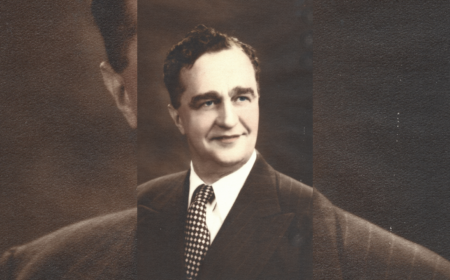
Melissa’s father, Kuno Georg Detlef Foelsch, came from a family that had been living in Estonia for around 300 years, when his ancestors came from Lubeck, Germany.
Kuno was born in 1894 in Tallinn, which was part of the Russian empire then. When World War I broke out, he was conscripted in the Russian Army. When the Russian Civil War erupted, he joined the anti-communist White Russian side, which lost. He was in the army under the command of General Anton Ivanovich Denikin, which was evacuated around 1920 from the Crimea by the Red Cross to Istambul, in Turkey. There he worked for a year peeling potatoes at a restaurant. Melissa recalled in the ADST Oral History, “He was preparing his favorite dish, sort of ground meat with peas and onions and chopped potatoes and I watched him peeling potatoes. I said, ‘How can you peel so fast?’ Potatoes are not easy. Then he told me the story that he peeled potatoes for one year.”
By 1922, Kuno was already enrolled in Braunschweig Technical University in Germany, where he studied and worked in laboratories of that university until 1929, when he obtained his master’s degree in applied physics.
Also in 1929, he married Miliza Korjus, who was starting her singing career with performances in Estonia. Miliza was 15 years younger than him.
He then did research at Braunschweig on thermodynamics and optical measurements in ultraviolet light by photoelectric methods, which were very advanced topics at the time.
The couple lived together for a while in Germany in 1932 and returned to Tallinn in the autumn of that year, when Melissa was born. In the following year, he returned to Braunschweig, where he completed his doctoral thesis on magnetic fields. In 1935, he received his Ph.D. from Braunschweig in theoretical physics, and the following year published his thesis in Archiv für Electrotechnik, a major German electrical engineering journal.
When he moved to Los Angeles in 1936 with Miliza, he did not need to work because of her income from the tremendous success of MGM production The Great Waltz.

He became a US citizen in 1941. In that same year, Miliza and their daughter moved to Mexico.
Sometime before 1943, Kuno and his daughter’s nanny, Emilie (Lia), fell in love. Lia, born in Latvia, had been the nanny when they lived in Germany and immigrated to the US with the family. When Miliza and her daughter moved to Mexico, Lia stayed in Los Angeles. Shortly after Miliza returned to Los Angeles in 1946, she and Kuno divorced.

Starting in 1943, in the middle of World War II, Kuno began working for American aircraft manufacturers, often on secret projects. He worked for Hughes, Aerojet, North American, Oscillojet, Marquardt and other companies as stress analyst or physicist on jet propulsion. The pay was good.
In 1947, he was suddenly dismissed from North American and Marquardt because he had lost his security clearance.
“My father was suddenly dismissed from his well-paying job,” Melissa wrote in a memoir. “He had been working since the beginning of World War II with various companies that had government contracts. He had a Ph.D. In theoretical physics, and master’s degrees in applied physics and mathematics – all degrees from German universities. My father, who had been sought after by employers working in the aeronautical/rocket field, was no longer able to find work with any of these companies. No reason or explanation was given.
Years later, quite by accident, while working at the State Department, I ran across messages citing my uncle in Sweden – my father’s youngest brother – as an East-West trader. Trading with the Soviet Union in those days was definitely a suspicious activity.
Then my father started receiving the unemployment checks of $25 a week for 26 weeks. When that income stopped, we started selling the furniture. On the weekend we would take furniture to Bekins Storage, who ran an auction every Sunday. We kept our fingers crossed during the auction and came home with a little money. Our diet was heavy on noodles, spaghetti and canned tuna. Some friends loaned us small amounts of money.
We were very poor. I remember one Christmas when my father and I went out on Christmas Eve to see if we could buy a tree for change, not bills. We found a scrawny tree and asked how much. The man said one dollar (which was too high a price, but there were only a few trees left). My father said he couldn’t pay that much and started to walk away. The man noticed that I was beginning to cry, and he gave us the tree. At home I decorated this miserable looking tree with all the expensive decorations we had accumulated when we lived in the gorgeous villa my mother had bought in Pacific Palisades when she made The Great Waltz, which had been sold during the divorce proceedings.
Desperate for income, my father heard of an opening for selling vacuum cleaners. He sold a few vacuum cleaners but was not successful. What I did admire was how he must have hidden his hurt pride from being the “Herr Doktor” in German society to being a salesman. Never a word of complaint, but his face and bearing showed the stress and strain he was under. [Note: perhaps the experience of having peeled potatoes helped here.]
At school, in my civics class I learned that Americans had elected officials who served in Congress. I found out that Donald L. Jackson was the representative for the 16th congressional district in California. His office was in the Santa Monica post office. So, I took my father’s little Olympia portable typewriter – which had been the rage in Berlin before we left in 1936 – and typed a letter, explaining my father’s background, his sudden loss of employment and the financial plight we were suffering. My father signed the letter, and I delivered it personally to Congressman Jackson’s office.
Within a week, there was a phone call from Congressman Jackson, and a meeting was set up for my father to meet him. Several weeks later a hearing was set up for my father in downtown Los Angeles. In about a month, my father’s security clearance was restored and he was reemployed. Several months later, my father received a generous financial restitution from the U.S. Government, and we were able to buy a small but very nice house in Pacific Palisades.”
With his security clearance reinstated, he resumed working at aircraft manufacturers until 1958.
He lived in Southern California with Lia until he died in 1965, aged 70.

Alfred Wells
Alfred Wells, born in 1916 in White Plains, New York state, in the US, always wanted to become an architect but thought that law and diplomacy were more proper careers. It wasn’t until 1966, when he retired after 25 years in the US Foreign Service, that he began his lifelong career dream and graduated in 1970 from the Architectural Association (AA) School of Architecture in London with two degrees in tropical architecture and in urban planning. He then went on to work on several continents over the next twenty years.
While studying law at Yale in the 1930s, Alfred treasured his classes about architecture and kept detailed notes. He entered the Foreign Service in 1941 and served in Buenos Aires, Colombo, Paris, Rangoon, Vienna, Bremen, Bonn and London. In Rangoon, he lived in a houseboat that he himself built. When in Vienna, he built a small wooden house for his daughter and then had the whole structure dismantled, shipped to Mt. Riga, near Salisbury, Connecticut, and rebuilt it for her. Wherever he went, he took dozens of photos of churches, façades, pagodas, statues and other beauties of architecture.
When in Paris in 1949, he married Dee Wells, who later wrote the bestseller novel Jane. They had a daughter, Gully. A few years later, Alfred and Dee divorced amicably, and Gully grew up with her mother in London.
In 1960, he married Melissa Wells, who served as ambassador to several African countries and Estonia.
In his last post, while living in an exquisitely decorated home on Eaton Square in London, he served as executive assistant to Ambassador David Bruce.
Upon retirement in 1966, Alfred began studying architecture at AA in London. He was 50 years old, in class with much younger colleagues who had very strong opinions about the war in Vietnam. At one point, his friends convinced him to go to a protest in front of the US Embassy, where his wife was working that day, but he quietly slipped out while the students clashed with the police.
The first structure that he built, as an AA student, was a wooden cube to serve as a vacation home for the family in Carriacou, an island belonging to Grenada. He tested the structure by asking his AA student friends to help set up the cube in Brompton Square, London, much to the puzzlement of the neighbors. The cube was permanently built in Carriacou, survived several hurricanes but was blown away by US Marines in 1983 when they invaded the island. The Department of Defense compensated the Wells family for the lost cube.
In 1969, he published his first work on architecture in the AA Quarterly, about low-cost housing in Casablanca. Upon moving to Washington, DC, in 1971 he worked for Doxiadis Associates (two years), John Portman Associates (three years) and for Habitat in Haiti. In 1978, he was a senior planner in the New York City Mayor’s Office of Development.
From 1980 to 1981, Wells worked as a consultant to United Nations Development Programme (UNDP) on housing for UN employees in the poorest countries of Africa and Asia, where rent can be high and quality housing scarce.
In the seventies, he built a spacious two-story treehouse in Mt. Riga, Connecticut and a proper vacation house in Carriacou, both of which survived hurricanes. In the eighties, he refurbished a 200-year-old manor house, La Tour, in Cessy, France, just outside of Geneva. The former owner of La Tour sold it to the Wellses under the condition that they would not change the outside aspects of the property.
In 1989, he did a study, for free, for the Mozambican government to determine the correct value for compensating owners of traditional caniço homes in Maputo, the capital, as part of projects in that city.
In 2001, at the age of 85 and with free time on his hands as Melissa served as ambassador to Estonia, he wrote a guide on the many manor houses in that lovely country. He gave the rights to an Estonian publisher. The guide was one of the most popular tourist books about Estonia and inspired others to do similar works. The book can be found at antique shops there.


He applied his skills to motor vehicles as well. In 1968, he adapted a VW Kombi so that the family of four could sleep in it and cook. The family would often sleep on the weekends in the fields of England and France, and cook their own breakfast. They also took the Kombi to the Atlas Mountains of Morocco. In 1981, he adapted a Toyota Hilux to the same effect, so that the family could drive from the posting in Nairobi to Geneva, via the Sudan and Egypt. The two-month trip through the Sudan was the best trip the family ever took.
Starting in 1969 all the way until 2005, he constantly worked on a home in the small town of Agulo, on the island of La Gomera, in the Canaries, where the couple would live after Melissa retired in 2001. He died in the Canary Islands in 2014 and is missed by many people there. A local restaurant in Agulo, La Vieja Escuela, has a dessert named after him.

Alfred and Melissa are survived by their sons Christopher and Gregory, and by his daughter Gully.

Birth in Estonia 1932
Melissa Wells was born Militza-Elisabeth Foelsch on November 18, 1932, in Tallinn, Estonia, daughter of singer Miliza Korjus and physicist Kuno Georg Detlef Foelsch. Both parents were Estonian. This was the time after Estonia gained her independence in 1918, only to fall under the subsequent Soviet, Nazi and second Soviet occupations during and after the Second World War.
Melissa’s mother was starting her career as a coloratura soprano singer. Miliza Korjus had performed in Tallinn in her early twenties and in 1932 was performing in Berlin, Magdeburg and other German cities. In the autumn of that year, she returned to Tallinn, where her father lived, presumably to have her baby.


Kuno Foelsch, who was 15 years older than Miliza, had a master’s degree in applied physics from the Braunschweig Technical University in Germany. He had already done work in thermodynamics and optical measurements in ultraviolet light by photoelectric methods, which were very advanced topics at the time.
After Melissa was born, the family lived in Tallinn until around the middle of 1933, when they moved to Germany.

Here is a photo of the United States legation (embassy) in Tallinn in the 1930s. Melissa would return to the country where she was born as ambassador in 1998.

For more information about Miliza Korjus, click here.

High School in Los Angeles 1946 to 1950
In 1946, Melissa and her mother Miliza Korjus moved from New York to Los Angeles, where her father, Kuno Foelsch, lived. It was during this period that she went through a series of crises and challenges that would have a major impact on her personality.
“At this stage of my life, I was practically obsessed with trying to bring my parents together and have a happy family. I decided that if I went to live with my father in California, my mother would follow me there,” she wrote in a memoir in 2018.
It was during these three months in 1946 that Melissa learned that Lia, the lady who had been her nanny and had emigrated with her parents from Europe in 1936, had been secretly in love with her father for many years. Before the family moved to Mexico in 1941, “Lia was just a wonderful, warm-hearted nanny who took very good care of me while my mother was off becoming a movie star.” Lia stayed in Los Angeles and Kuno spent most of his time there, working at US aircraft manufacturers during World War II.
Once Melissa had returned to Los Angeles and tried to bring her parents together, “Lia became angry at me for trying to bring my parents together.” Melissa wrote in the memoir. The old pattern of angry shouting matches had begun again, this time supplemented with Lia’s tearful shrieks and interventions. “I was absolutely miserable,” she recalled. “My parents decided to go for the divorce.”
The divorce took place in California. In her ADST Oral History, she explained that “In those days if a child was 14 years old it had to appear in court and the judge would ask, ‘Do you want to live with your mother or your father?’ (…) I opted for my father. (…) A traumatic experience.” Her younger brothers, each of whom had a different father, stayed with her mother.
“The finality of the divorce was quite a blow to me,” she recounted in the memoir. Then came another blow: her father lost his well-paying job in 1947 and couldn’t find work anywhere because, unbeknownst to him, he had lost his security clearance to work in the defense industry. She and her father became so poor that they had to sell their furniture.
Her mother did not help because she had used all the money from the sale of the house in Pacific Palisades to purchase her lovely new home – without a mortgage. She also owed back taxes to the government.
“I started school at St. Monica’s in Santa Monica neighborhood,” she explained in the memoir. “I really liked the school very much, but I was very shy and did not have many friends at the beginning. The divorce of my parents was messy and reported in the newspapers. I assumed everybody had read the stories. Of course, at my school, nobody cared!
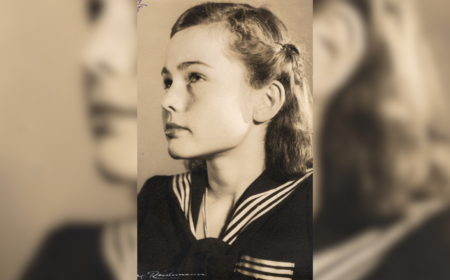
At school I had no friends. I was smart and got good grades but was very shy. At age 13, I had already reached my full height of 5 feet 10 1/2 inches (1.80 meters). I was taller than everybody – boys, girls, teachers, nuns and priests. And I only weighed 99 pounds (45 kilos) – a walking skeleton. Over the years, growing up beside my glamorous mother, I felt like an ugly duckling. Lump the foregoing with my family problems and it is understandable that I was suffering from a serious inferiority complex.”
“When I was crushed, it was due to my family breaking up and my parents divorcing,” she recounted in her ADST Oral History. “Again, I wouldn’t say it made me feel insecure. If anything, it concentrated my energies in terms of survival and breaking out of a situation which was very difficult, because I loved everyone concerned, but to make a life of my own. At that time, there was some publicity about the divorce in the papers. I was going to a Catholic school, and I felt that everybody knew about it and was looking at me, that sort of thing. Still, I was not going out with boys. I was sort of retarded on that score, generally speaking. I made up for it later.”
She explained that she was also shy. “As a child, and today I still think of myself as shy. Most people collapse when they hear me say I think of myself as a shy person, but I was very shy. I still think I am, because we all carry within ourselves images we have of ourselves originally. Sure, I’ve learned to overcome it, but basically, I’m shy.”
Then a friend made a difference.
“I was saved from further decline by a cheerful and friendly classmate named Barbara Dobrott who reached out to me. Barbara has remained my close friend to this day,” she wrote in the memoir. “I recall that our friendship started when she suggested that because of my height I should join her on the volleyball team. I did so and started playing other sports. I was especially good at swimming, which worked wonders on my body. By the time I graduated, I had added 30 pounds of muscle to my frame. Our swimming team won many meets and brought trophies back to the school.
Barbara and I became real buddies. As teenagers often do, we talked for hours on the phone after school and often she invited me to spend the night at her house. What bliss it was to become, for a brief period, part of a loving, happy family! I treasured every moment of those visits. But through Barbara, I not only went out for sports, but also made lots of other friends and actually became popular – even getting elected to school office. I began to experience self-confidence which I had never known before. (…) Thanks to Barbara’s outreach, the seed had been planted.”
Barbara and Melissa kept their friendship throughout their lives. When Melissa was Ambassador to Estonia fifty years later, Barbara visited her and wrote up a story in the magazine of their college, Mount Saint Mary’s. The two close friends talked for the last time via Facetime a week before Melissa passed away.

For more details on this difficult part of Melissa’s life, please see the ADST Oral History website.
For more information about Miliza Korjus, click here.

Swimming in L.A., Las Vegas and Europe 1951 to 1953
When Melissa was in high school in Santa Monica, Los Angeles, she discovered that she excelled at swimming. She was also good at volleyball and basketball, but nothing special, even though she was the tallest person in the school. Sports helped her gain more confidence.
“Swimming sort of opened up a lot of things. I became, sure, smart, I was brainy, everybody knew I was the gold pin kid. I knew [that] every quarter I would get the little gold pin, meaning the highest [grade] average. But I wasn’t popular. It was not that people disliked me. I was just not popular. Then I discovered this skill called swimming and started winning trophies for the school and they said, ‘Well, why don’t you come out for basketball? Why don’t you come out for volleyball?’ and I became the vice president of the Girls Athletic Association. It developed my personality,” she said in her ADST Oral History.


“Over the years I have been asked many times how, in the conservative fifties (when there were retarded views concerning women), I was able to forge ahead with a successful professional career,” she wrote in a memoir in 2018. “I have given this a good deal of thought and have come up with an unusual conclusion.
For openers, a few facts. I reached my full height of 5 feet 10 ½ inches (1.80 meters) at age 13. And I weighed 99 pounds (45 kilos), a walking skeleton. I was raised in Hollywood when my mother, Miliza Korjus, a well-known coloratura soprano singer, was brought over from Europe in 1936 by movie mogul Irving Thalberg to make a film. She could not speak a word of English and was 40 lbs. overweight. Two years later the film ‘The Great Waltz’ was released and she was a glamorous, gorgeous movie star. Over the years, growing up next to my mother, I felt like an ugly duckling. Then there was a very messy divorce which was reported in the newspapers, and I suspected that everyone had read. Yes, I was smart and had very good grades, but I was extremely shy and suffering from a severe inferiority complex.
However, during high school I had taken up swimming and became rather good at it. For one thing, thanks to swimming I had put on 30 pounds (13 kilos) of muscle. In addition to competitive swimming, I was also doing water ballet.” She even won a prize given by Esther Williams, who was the world’s most famous water ballet star.
She was determined to get out of Los Angeles. She did not want to get married soon, because of the traumatic experience of seeing her parents fight and then divorce. She did not want to become a Hollywood star and live in the shadow of her mother, who was not her role model. She tried to become a flight attendant but was turned away even before an interview because she was too tall. She was attracted to the exotic side of missionaries working in far-off places, but she wanted something more. The US diplomatic corps, known as the Foreign Service or State Department, best fit what she wanted. And her father, Kuno Foelsch, taught her that women could do work just as well as men.
“I had big dreams,” she wrote in a memoir. “I wanted to become a diplomat. I had read about those so-called ‘pinko’s’ in the State Department during the McCarthy era and thought they had wonderful careers, traveling about the world carrying out US foreign policy. That was for me! But how would I ever become one? I had heard about a School of Foreign Service at Georgetown University in Washington, D.C., but at that time my father had no money to send me far away to study.”
Melissa graduated from high school in Santa Monica neighborhood, Los Angeles, in 1950 and enrolled in Mount Saint Mary’s College, in West Los Angeles. As much as she liked the college, she had no intention of graduating from there. She wanted somehow to get to Georgetown. But she had no money.
“Through my water ballet activities,” she wrote in a memoir, “I learned that a show was being put together that featured water ballet to tour in Europe. I auditioned and was accepted for the Aqua Parade of 1953. But I found out shortly thereafter that in order to go on to Europe, I would also have to learn to dance and perform as a swimmer and dancer at the Desert Inn in Las Vegas. Swimming was OK, but dancing in a skimpy outfit on stage in front of those people was more than I could bear!”, she admitted.
Her Las Vegas manager noticed that she wasn’t comfortable with this. He told her, “Next time you go out on stage, I want you to shout to the audience ‘Look at me, all you lucky people!’. Don’t worry about the audience hearing you because the music will be so loud. I’ll be watching you close by to make sure you do it.”
Melissa did just as the manager demanded, and this gave her great confidence on the stage.
“So, I grit my teeth and learned to do hitch kicks in shoes with three-inch heel and platforms. On stage in my sequined costume and a headdress with two feet of feathers, I must have been over eight feet tall (2.4 meters). But I was in the back row …. Thank goodness! The first few nights in Vegas were awful for me. It turned out I was an excellent dancer, held up as an example during rehearsals, but inside I was wrestling with my shyness and timidity. Two shows a night and three on Saturdays for six weeks finally solved my problem.
I don’t remember exactly how long it took – maybe a dozen or more appearances on stage – but I remember very clearly the feeling of blossoming self-confidence: I enjoyed dancing, I enjoyed the music, and I started looking at unknown faces in the audience and smiling at them. God! It felt so good to be rid of what was holding me back!! How did I gain this self-confidence? I think it was the determination to go forward with my plans, even though I had to do something I dreaded terribly to get there. Looking back on that experience, it adds up to determination plus courage equals success. In my case, it came about in a rather unusual way.”


This was big show business. The show was headlined by Johnny Weissmuller, a muscular actor and swimmer who would play Tarzan in the movies.
The new European show, Aqua Parade, left for Italy on July 13, 1953, without the Tarzan actor. It performed in Torino, Rome, Basel, Dortmund and Berlin, among other cities. There was ample media coverage.
Read Aqua Parade insert in Torino newspaper, August 5, 1953
Read Aqua Parade booklet for Dortmund, November 1953

Six months later the show went bankrupt, and most of the girls were repatriated in December “as destitute Americans by the State Department – not exactly how I had planned to meet the State Department!” she wrote in a memoir. (Five years later, when she joined the Foreign Service, a lady from the State Department gave a presentation to the entering “class” of new officers about repatriation of destitute Americans. It was the same official who had handled the Aqua Parade girls. Fortunately for Melissa, the lady did not recognize her.)
Melissa didn’t go back with the other girls. On the Aqua Parade tour, she had started dating the manager, an Italian by the nickname of Tonino (no full name is available) and lived with him during 1954 in Milan. It was her first real experience of having a boyfriend. He was 22 years older and very understanding of her past. This experience healed her from the abuse that she had suffered as a child. However, he was very jealous and that led her to leave him at the end of the year.
She went on with her plans, totally unaware that neither Georgetown University nor the State Department had any interest in women students or officers. But she now had determined self-confidence, and it stayed with her all my life.
Melissa was able to do water ballet movements for many years – even when she was Ambassador to Zaire in 1991.
She maintained contact with her Aqua Parade friends for decades.
Click here for more.

United States Mission to the United Nations (USUN), New York 1977 to 1979
In 1977, some of the economic issues being debated at the United Nations included a new international economic order that would be more inclusive to Third World countries as well as the growing pressure for economic sanctions on Rhodesia and South Africa. President Jimmy Carter was now in the White House and was paying special attention to human rights. He chose Andrew Young, who had been active in the Black civil rights movement, as his ambassador to the UN. Young, in turn, picked Melissa to represent the US on the UN Economic and Social Council (ECOSOC).

Melissa and Andy had a warm relationship, and their sons Gregory and Bo got on very well. Andy included Gregory in the little swearing-in ceremony for her post at the USUN building across from the UN.

The work involved negotiations with many countries, not just in the UN building or in offices but also at receptions. The US diplomats, as with those of other countries, would approach the representatives of other countries at these receptions to see if they could agree to vote the same way or have one propose a motion that would be supported by the other. The US team had to divide up to reach other delegations. “There just isn’t enough time,” Melissa explained to Ann Miller Morin in her book, Her Excellency. “We knew there was this reception and that reception. So, we’d say, ‘Are you going to this one? What time are you going to be there? Okay. You’re going to that one next? All right. See you there. We’ll continue there. In the meantime, will you talk to [the Third World countries] on this one?’ But you also had to coordinate with key delegations and your opposite number: ‘We’re more or less on the same position. Would you sound out what his position is?’”
The frequent receptions and cocktails were a form of work. This meant that Melissa, who lived with her family walking distance from the UN headquarters, was often not at home in the evenings.
Her work was reported in the US press.
Read Washington Post on Melissa Wells at USUN, December 11, 1977
Read Los Angeles Times on Melissa Wells at USUN, October 20, 1977
Her greatest achievement at this job was getting assistance for schools in Palestine. It was a consensus achieved at the United Nations Development Programme (UNDP), in 1978.
“To make a long story short,” she explained in the ADST Oral History website, “it eventually was brought to a vote, but we had negotiated with a number of delegations, to the point where when it was voted and we were soundly defeated, it was Israel, Malawi, and the US, and the rest of the world was all against us or abstaining or off to the bathroom or someplace. Actually, however, we had won. The delegations from other countries came up and congratulated us, because they knew that we might be able to develop the resolution into something for the UNDP governing council down the road. Then we started the process with the State Department in Washington to figure out where we’re going. Okay. [Then] negotiations with the Palestinian Liberation Organization (PLO) took place.
“’We’ meaning, the US mission, but the negotiations with the PLO were done through Bradford Morse’s office, the administrator of UNDP, who dealt directly with them, of course. This was already at arm’s length. We came up with language which was then accepted at the governing council of the UNDP in the summer of 1979 in New York, and we were very proud. I wrote the statement when we came to this item, and we had alerted our colleagues from the Middle East earlier on that the U.S. could approve the resolution. The other delegations rewrote their statements. They didn’t expect a consensus.”
Through her contacts with Bradford Morse, she was invited to head the UN operations in Uganda in 1979.
United States Mission to the United Nations (USUN), New York 1977 to 1979
In 1977, some of the economic issues being debated at the United Nations included a new international economic order that would be more inclusive to Third World countries as well as the growing pressure for economic sanctions on Rhodesia and South Africa. President Jimmy Carter was now in the White House and was paying special attention to human rights. He chose Andrew Young, who had been active in the Black civil rights movement, as his ambassador to the UN. Young, in turn, picked Melissa to represent the US on the UN Economic and Social Council (ECOSOC).
Melissa and Andy had a warm relationship, and their sons Gregory and Bo got on very well. Andy included Gregory in the little swearing-in ceremony for her post at the USUN building across from the UN.
The work involved negotiations with many countries, not just in the UN building or in offices but also at receptions. The US diplomats, as with those of other countries, would approach the representatives of other countries at these receptions to see if they could agree to vote the same way or have one propose a motion that would be supported by the other. The US team had to divide up to reach other delegations. “There just isn’t enough time,” Melissa explained to Ann Miller Morin in her book, Her Excellency. “We knew there was this reception and that reception. So, we’d say, ‘Are you going to this one? What time are you going to be there? Okay. You’re going to that one next? All right. See you there. We’ll continue there. In the meantime, will you talk to [the Third World countries] on this one?’ But you also had to coordinate with key delegations and your opposite number: ‘We’re more or less on the same position. Would you sound out what his position is?’”
The frequent receptions and cocktails were a form of work. This meant that Melissa, who lived with her family walking distance from the UN headquarters, was often not at home in the evenings.
Her work was reported in the US press.
Read Washington Post on Melissa Wells at USUN, December 11, 1977
Read Los Angeles Times on Melissa Wells at USUN, October 20, 1977
Her greatest achievement at this job was getting assistance for schools in Palestine. It was a consensus achieved at the United Nations Development Programme (UNDP), in 1978.
“To make a long story short,” she explained in the ADST Oral History website, “it eventually was brought to a vote, but we had negotiated with a number of delegations, to the point where when it was voted and we were soundly defeated, it was Israel, Malawi, and the US, and the rest of the world was all against us or abstaining or off to the bathroom or someplace. Actually, however, we had won. The delegations from other countries came up and congratulated us, because they knew that we might be able to develop the resolution into something for the UNDP governing council down the road. Then we started the process with the State Department in Washington to figure out where we’re going. Okay. [Then] negotiations with the Palestinian Liberation Organization (PLO) took place.
“’We’ meaning, the US mission, but the negotiations with the PLO were done through Bradford Morse’s office, the administrator of UNDP, who dealt directly with them, of course. This was already at arm’s length. We came up with language which was then accepted at the governing council of the UNDP in the summer of 1979 in New York, and we were very proud. I wrote the statement when we came to this item, and we had alerted our colleagues from the Middle East earlier on that the U.S. could approve the resolution. The other delegations rewrote their statements. They didn’t expect a consensus.”
Through her contacts with Bradford Morse, she was invited to head the UN operations in Uganda in 1979.