
Uganda Album
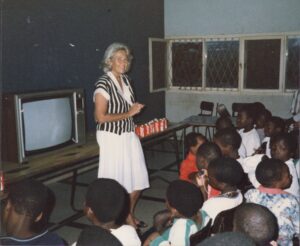
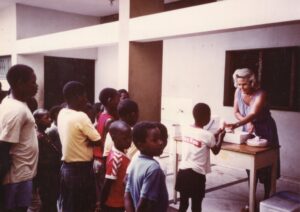
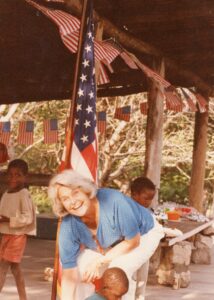
At the end of 1981, the UN staff, under guidance by Francis Dubois and Ben Brown, gave Melissa an album with photos to remember the lighter side of their intense work together.


The images and names shown in these photos are part of an album presented to Melissa Wells upon her departure from Uganda in late 1981. If you are one of the people depicted and wish to request removal or anonymization, please contact us through the official channel of this website.
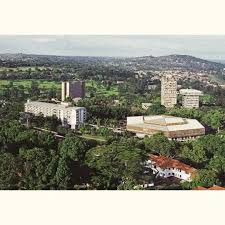
Return to Uganda
In 1992, Melissa went back to Uganda for the first time since leaving in 1981. “I stayed in a hotel, the Sheraton, in which I had lived for about three weeks and gave up because at that point it was still trying – this was 1979 – it was still trying to be a hotel,” she recounted in the ADST Oral History website. “Squatters were moving in, chopping up the furniture, burning it to cook their food. There was no running water. I had to use the fire hose to fill my pail up once a day so that I could flush the toilet once a day. This is very healthy. Very healthy. Once you’ve been an ambassador you should trek up five floors with a bucket of water to flush your toilet once a day. It puts everything into scale. (…) And I recognized the hotel – same place and the lobby is all nicely done and I go up to the desk and ‘Oh yes, Ambassador Wells,’ and they give me a drink with umbrellas and cherries sticking out of it, a welcome drink. I go to my room and the first thing I want to do is find that fire hose that I used to use to fill up my bucket. I go back and they seemed to have moved it and it’s no longer accessible. It’s sort of locked up.
And then to go out and walk up and down the streets which was inconceivable in my day. I mean, there was shooting and looting. And just to absorb Kampala one evening with little restaurants coming back and people walking around at night. I remember sitting on that balcony and thinking, “I looked out at this scene.” It wasn’t the same room obviously in which I stayed in 1979, and it was so different.
Then the next day I had hired a car to go to the base camp for the climb, and I know the country well and I asked, ‘Could you take the Mubende road and then come back through Mbarara?’. ‘Oh, yes.’ So, we took the Mubende road and passed little villages – and I literally started to cry because I could see a post office, a PTT, and people were going in and out doing their post office business. This was inconceivable. I mean had I gone on the Mubende road in 1980, I would have had my water, my gas, my money, my food – a post office, forget it. There was nothing. (…) You had to have everything with you. Then of course topping that off was a climb of the Ruwenzori mountains. It was gorgeous. It was in Uganda that I was first exposed to the violence, the suffering, the tragedy of Africa, and it was in Uganda that I was healed. And I had the privilege of telling President Yoweri Museveni that story during a visit to Kampala in 1994 [when she was going to South Sudan, just north of Uganda]. I got to know Museveni quite well during that earlier period before he became president.”

Uganda 1979 to 1981
The following quoted text is from an e-mail that Melissa wrote in 2015 to a close friend.
“When I arrived in Uganda in the fall of 1979, the country had just been liberated from the grip of ldi Amin by the Tanzanian Armed Forces joined by Ugandan resistance groups. I was on a secondment (i.e. was lent) from the State Department to the United Nations Development Programme (UNDP). My title in Swahili as the senior UN official in the country was wonderful: Mama Balozi wa Umoja wa Mataifa, which translates into Madam Representative of all the Nations in the World.
But life was definitely not wonderful. I arrived in Kampala as the entire UN family was being evacuated. Two staff members had just been murdered – one for his transistor radio, the other for his wristwatch. The mission for the time being was reduced to my deputy, one program officer, a secretary and me.
The first night in the place where I was staying, I heard gunfire and rushed out on the balcony to see what was happening. Another round of gunfire hit the wall near where I was standing. I dropped to my knees and crawled back into the room (that’s what they do in the movies) and into the bathroom, where I stayed until the gunfire stopped. After that, I never again went out to see why there was gunfire. This experience served me well in Uganda, Mozambique and Zaire.
Gradually we increased our staff from the evacuees in Nairobi who were willing to work in Uganda without dependents. My husband and younger son remained in Nairobi and never moved to Uganda. While our mission was to fund development projects, it became increasingly clear that Uganda was in desperate need of humanitarian aid. In northeastern Uganda, in an area called Karamoja, there was downright famine. The Karamajong, a name covering a group of semi-nomadic tribes in that region, were fighting each other with weapons looted from a large arsenal that ldi Amin had kept in the local capital Moroto. [Melissa would comment at the time that an AK-47 machine gun was so cheap that it was worth a sack of potatoes]. Those tribes living near Moroto had a clear advantage over the tribes living far away. The World Food Program immediately mounted a massive program and I, as the senior UN official, commandeered all trucks from other UN agency projects to transport the food to Karamoja. I traveled to Karamoja every week to see how the food was being distributed by local missionaries whom we entrusted with that task.
One evening driving from Kampala to Entebbe where I lived, I was held up at gunpoint, and the car was stolen. I was not hurt, but my driver was beaten up, and we were left standing on a deserted – at that hour – road waiting for someone to give us a ride to Entebbe. UNDP Headquarters in NY were very upset at what had happened to me. I explained that what Uganda really needed before any development projects was security.
But UNDP, by its mandate, could not fund any project relating to security. The reason is that by some fluke chance any such project might conceivably, years down the road, be seen as the genesis for an unsavory security force.
The following weekend, on my way to Karamoja, I saw a group of men in tattered police uniforms walking along the road. We stopped and I asked them who they were and where they were going. They said they were the remnants of a local police force and were on their way to a village where there had been some trouble.
They were doing this voluntarily and without pay. We gave them a ride and, in the car, they explained that they had been trained at the Police Academy in Exeter (UK) before ldi Amin took power. When Amin took power, he disbanded all police forces and the army and only relied on his fellow Kakwa tribesmen for security forces.
Upon returning to Kampala, I phoned Bradford Morse, the Administrator of UNDP, and asked him to agree to let me go out with my “begging bowl” to the various embassies in Nairobi and request funds to set up a police training project. Morse agreed and I contacted several embassies. The Canadians were most helpful and generous and took the lead offering the RCMP (Royal Canadian Mounted Police) to do the training. They also agreed to administer the special fund. Other embassies contributed funds and the project got going.
Unfortunately, after several months of training, I had to cancel the project. The site where the trainees were housed was attacked by rogue elements of the so-called Ugandan Army as they feared that their numerous lucrative checkpoints would be dismantled by a trained police force. Checkpoints had become infamous for people being relieved of money and belongings.
During all my years in gun-toting Africa, Uganda was my most dangerous posting.”
For more information about the carjacking, click here.
The problems in Uganda, especially the famine in Karamoja, received plenty of attention from the press. The US documentary program 60 Minutes did a report criticizing the UN’s handling of famine relief operations.
The Washington Post sent its Africa correspondent to accompany Melissa in Karamoja, including with photos. The New York Times magazine had a cover story.


Melissa lived in a room in the Lake Victoria Hotel, which was relatively safe, although shootings did occur there. She and her staff worked in an old office building that needed much repair.


By coincidence, her husband Alfred obtained an architectural work contract with the UN to check on housing for UN employees in the world’s least developed countries. As Melissa explained, he was based in Nairobi and their younger son Gregory lived with him. The older son was in college in New York.
She would come to New York occasionally to report to the UN headquarters on the situation in Uganda. On one of these visits, she took time out of her busy schedule to have dinner with the college roommate, Oscar, of her older son Christopher. She inspired him. It was their only meeting, but it had a big impact on both. Click here for Oscar’s memories.

When Melissa left Uganda, her staff gave her an album with the photos of the UN staff.
In 1982, she spoke at the UN Disaster Relief Organization about her work and in 1984 she published an article in a technical magazine, Ekistics.
In 1992, Melissa went back to Uganda for the first time since leaving in 1981. Everything was back to normal. “It was in Uganda that I was first exposed to the violence, the suffering, the tragedy of Africa, and it was in Uganda that I was healed,” she said in the ADST Oral History website.
Uganda 1979 to 1981
The following quoted text is from an e-mail that Melissa wrote in 2015 to a close friend.
“When I arrived in Uganda in the fall of 1979, the country had just been liberated from the grip of ldi Amin by the Tanzanian Armed Forces joined by Ugandan resistance groups. I was on a secondment (i.e. was lent) from the State Department to the United Nations Development Programme (UNDP). My title in Swahili as the senior UN official in the country was wonderful: Mama Balozi wa Umoja wa Mataifa, which translates into Madam Representative of all the Nations in the World.
But life was definitely not wonderful. I arrived in Kampala as the entire UN family was being evacuated. Two staff members had just been murdered – one for his transistor radio, the other for his wristwatch. The mission for the time being was reduced to my deputy, one program officer, a secretary and me.
The first night in the place where I was staying, I heard gunfire and rushed out on the balcony to see what was happening. Another round of gunfire hit the wall near where I was standing. I dropped to my knees and crawled back into the room (that’s what they do in the movies) and into the bathroom, where I stayed until the gunfire stopped. After that, I never again went out to see why there was gunfire. This experience served me well in Uganda, Mozambique and Zaire.
Gradually we increased our staff from the evacuees in Nairobi who were willing to work in Uganda without dependents. My husband and younger son remained in Nairobi and never moved to Uganda. While our mission was to fund development projects, it became increasingly clear that Uganda was in desperate need of humanitarian aid. In northeastern Uganda, in an area called Karamoja, there was downright famine. The Karamajong, a name covering a group of semi-nomadic tribes in that region, were fighting each other with weapons looted from a large arsenal that ldi Amin had kept in the local capital Moroto. [Melissa would comment at the time that an AK-47 machine gun was so cheap that it was worth a sack of potatoes]. Those tribes living near Moroto had a clear advantage over the tribes living far away. The World Food Program immediately mounted a massive program and I, as the senior UN official, commandeered all trucks from other UN agency projects to transport the food to Karamoja. I traveled to Karamoja every week to see how the food was being distributed by local missionaries whom we entrusted with that task.
One evening driving from Kampala to Entebbe where I lived, I was held up at gunpoint, and the car was stolen. I was not hurt, but my driver was beaten up, and we were left standing on a deserted – at that hour – road waiting for someone to give us a ride to Entebbe. UNDP Headquarters in NY were very upset at what had happened to me. I explained that what Uganda really needed before any development projects was security.
But UNDP, by its mandate, could not fund any project relating to security. The reason is that by some fluke chance any such project might conceivably, years down the road, be seen as the genesis for an unsavory security force.
The following weekend, on my way to Karamoja, I saw a group of men in tattered police uniforms walking along the road. We stopped and I asked them who they were and where they were going. They said they were the remnants of a local police force and were on their way to a village where there had been some trouble.
They were doing this voluntarily and without pay. We gave them a ride and, in the car, they explained that they had been trained at the Police Academy in Exeter (UK) before ldi Amin took power. When Amin took power, he disbanded all police forces and the army and only relied on his fellow Kakwa tribesmen for security forces.
Upon returning to Kampala, I phoned Bradford Morse, the Administrator of UNDP, and asked him to agree to let me go out with my “begging bowl” to the various embassies in Nairobi and request funds to set up a police training project. Morse agreed and I contacted several embassies. The Canadians were most helpful and generous and took the lead offering the RCMP (Royal Canadian Mounted Police) to do the training. They also agreed to administer the special fund. Other embassies contributed funds and the project got going.
Unfortunately, after several months of training, I had to cancel the project. The site where the trainees were housed was attacked by rogue elements of the so-called Ugandan Army as they feared that their numerous lucrative checkpoints would be dismantled by a trained police force. Checkpoints had become infamous for people being relieved of money and belongings.
During all my years in gun-toting Africa, Uganda was my most dangerous posting.”
For more information about the carjacking, click here.
The problems in Uganda, especially the famine in Karamoja, received plenty of attention from the press. The US documentary program 60 Minutes did a report criticizing the UN’s handling of famine relief operations.
The Washington Post sent its Africa correspondent to accompany Melissa in Karamoja, including with photos. The New York Times magazine had a cover story.
Melissa lived in a room in the Lake Victoria Hotel, which was relatively safe, although shootings did occur there. She and her staff worked in an old office building that needed much repair.
By coincidence, her husband Alfred obtained an architectural work contract with the UN to check on housing for UN employees in the world’s least developed countries. As Melissa explained, he was based in Nairobi and their younger son Gregory lived with him. The older son was in college in New York.
She would come to New York occasionally to report to the UN headquarters on the situation in Uganda. On one of these visits, she took time out of her busy schedule to have dinner with the college roommate, Oscar, of her older son Christopher. She inspired him. It was their only meeting, but it had a big impact on both. Click here for Oscar’s memories.
When Melissa left Uganda, her staff gave her an album with the photos of the UN staff.
In 1982, she spoke at the UN Disaster Relief Organization about her work and in 1984 she published an article in a technical magazine, Ekistics.
In 1992, Melissa went back to Uganda for the first time since leaving in 1981. Everything was back to normal. “It was in Uganda that I was first exposed to the violence, the suffering, the tragedy of Africa, and it was in Uganda that I was healed,” she said in the ADST Oral History website.
Mozambique 1986 to 1991
In 1989, the New Yorker magazine had a two-piece article on the difficult situation that Mozambique was in. In the second part of the article, it reads, “There is also the Melissa Wells factor. (…) She was Portuguese-speaking, experienced in Africa, knowledgeable about Mozambique, and endlessly energetic, travelling the length of the country to see things for herself, and adopting local projects. From the news reports, it -seemed there was hardly an orphan in Mozambique who was not at risk for the American Ambassador’s kindness. She is a tall, handsome woman with the easy manner and the steady gaze of a very good poker player. She is a serious reporter, known for personally investigating important stories, asking hard questions, and making detailed notes. And she is taken seriously by the Mozambican government.” (Article by William Finnegan in the New Yorker, May 25, 1989. Finnegan also wrote a book about the civil war there, A Complicated War.)
This description sums up one of the high points of Melissa’s career: her time as ambassador to Mozambique, and the one-year period preceding it.
Under US law, the Senate must approve all ambassadors. Melissa was nominated by President Ronald Reagan in 1986, but a group of hard-right senators blocked her name for almost a year, not for personal reasons but because they objected to US policy. You can read more here.
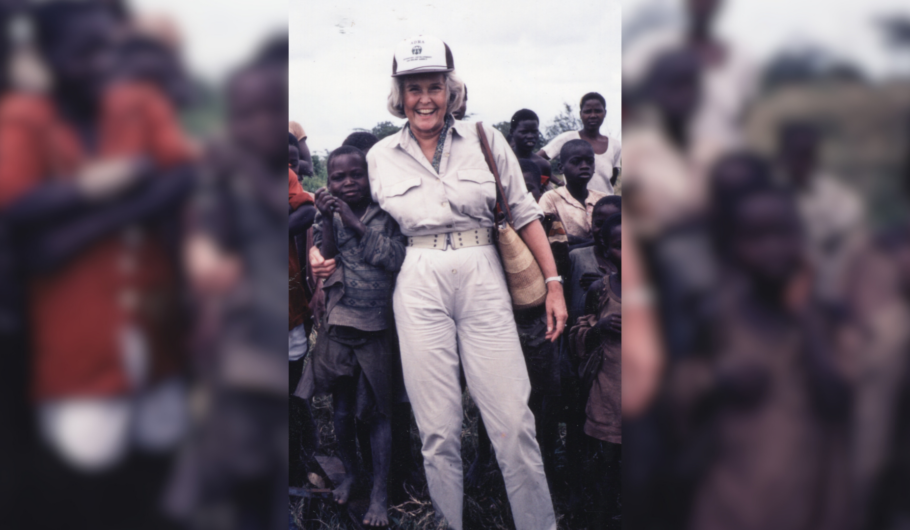
During Melissa’s time in Mozambique, Renamo, the rebel group supported by the apartheid South African government, was waging an armed struggle against the Frelimo government. Renamo waged a campaign of terror, committing atrocities throughout much of the country. Melissa demonstrated tremendous courage in traveling throughout the country amid this conflict.
Michael Ranneberger, her second-in-command at the Embassy, remembers some of the trips they took together. On one occasion they crossed the Limpopo River in a small boat, with some Mozambican security guards accompanying them, to visit the site of an alleged massacre committed by Renamo. Melissa wanted to ensure that the Embassy conveyed the most accurate picture possible about what was transpiring in the country. This was essential, as right-wing members of Reagan’s administration and Members of Congress advocated for U.S. support for Renamo against the Marxist Mozambican government. On another occasion, Melissa and Mike flew in a small three-seater aircraft to land on a rough dirt strip for a similar investigation, narrowing missing crashing into a herd of grazing cattle as the plane flew in low over the trees and dipped for it landing onto the field.
The following quoted text is from Ann Miller Morin’s book, Her Excellency.
“I made it my business to travel a great deal, to visit the campos dos deslocados. These were the people who had been displaced, who are refugees within their own country. I talked to people in hospitals, and to civilians. Those with amnesty obviously had been carrying weapons before, but essentially [I talked) to civilians, to try to piece together from them, number one, what happened to them? How was this attack? And two, what was their understanding of what this world is all about? [I discovered] there was a strong internal component to the war that I had not been aware of and [that] was basically rooted in the mistakes that the [political party of] Frelimo [leaders] had made when they came to power at the time of independence. Once I learned about these and raised them with the government, they began to respond and say, ‘Yes, we admit we made mistakes. We made mistakes.’
Let me give you an example. Shortly after I arrived, I was, of course, making my calls, and I met with one of the leaders, what you would call the theoretician for the Frelimo party, [someone who could discuss] where they’ve been, where they’re going. It was a bit of a stiff meeting at first, and he was definitely what one would call a hard-liner. As we started to talk, I said, ‘You know, I’d like to try out on you some of the questions that I had to answer for the Senate of the United States to be confirmed.’
He reacted with amusement but quickly saw her point that the “language about Marxist-Leninist dogma” that Mozambicans spoke, with no intention of implementing the dogma, colored others’ perceptions of them. The point came up again later, after she and the theoretician had become good friends.
Before the Frelimo party congress in 1989, he put the question to me, saying, ‘Look, Melissa. If you could write it out, what would you like to see come out of this congress?’ I came back immediately and said, ‘Remember the first time we met, and I tried out those questions on you? Why do you need all these references in your charter to Marxism, Leninism, and all? You’re not doing it. You’re trying to privatize. The churches are open. Is this a monument that you need for sentimental reasons? This is your past. You’re shooting yourself in the foot. It’s time that you gave all this up.’ Now, I cannot say that I’m personally responsible for this, because there was a general trend in this direction in any event, but I’m pleased to report that as a result of that congress, there were no further references to Marxism or Leninism in the party thinking.”
Melissa had an excellent working relationship with Mozambican President Joaquim Chissano. In addition, two previous experiences helped make Melissa both comfortable and effective when operating in the environment of a Marxist-Leninist government in a violent country: she had been ambassador to Guinea-Bissau and Cape Verde, both of which had the same ideological roots as Frelimo, and she had served in Uganda, where law and order still had to be restored.
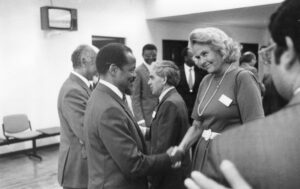
One of Melissa’s most important initiatives was to help reunite boys who had been separated by the civil war with their families in far-flung villages. Click here for more information.
She went into the interior, not just to inspect sites where attacks had taken place, but also to speak with local officials and farmers.
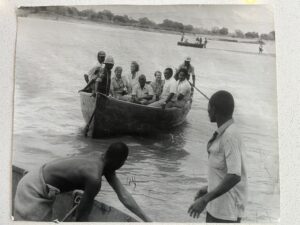
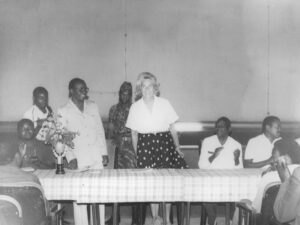
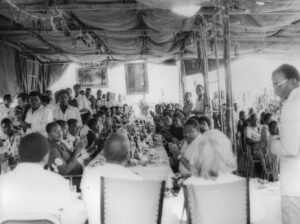
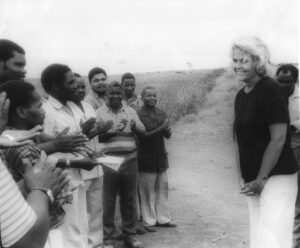
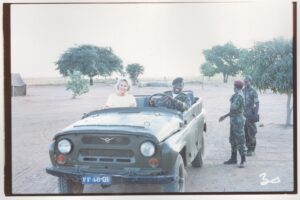
Albie Sachs, a white South African anti-apartheid activist who lived in Maputo, became friends with Melissa and considered her “a most unusual Ambassador who was a true friend to Africa, remarkable as much for what she wasn’t as for what she was.” Click here for more.
As was her duty, she accompanied Chissano on his visit to US President Ronald Reagan in the White House in October 1987.
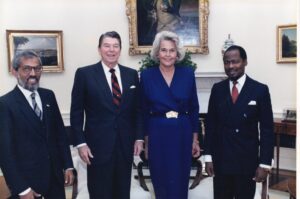
She spoke on television and to the local printed press about the current issues.
Melissa’s husband Alfred also helped using his urban planning know-how. He wrote a study, for free, for the Mozambican government to estimate how much homes for poor people cost in Maputo.
Despite her busy schedule, the Ambassador found time to take care of her beauty. She would go regularly by plane to Johannesburg to have cosmetic touch-ups. She also did a little tourism, visiting the Ilha de Moçambique where in the 1800s the US had a consulate.
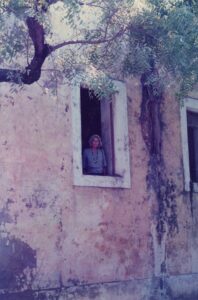
As of 2022, there were many pictures of Melissa at the US embassy in Maputo.
In 1991, she was named ambassador to Zaire.
Jesse Helms
The following text is from an e-mail that Melissa wrote in 2015 to a close friend.
“I was nominated by The White House on October 7, 1986, to be the next ambassador to Mozambique. I had my Senate confirmation hearing without incident. However, trouble was expected as the State Department was aware that Senator Jesse Helms and several like-minded senators might hold up the confirmation unless the new ambassador was instructed to meet with Renamo, a group fighting the Marxist-Leninist Government of Mozambique.
Helms had not attended my confirmation hearing, but the trouble anticipated began shortly thereafter. Some questions arrived to be answered by me; more questions arrived in the following months totaling 247 – a record number.”
Greg Fergin was the Mozambique desk officer at the State Department during her arduous and lengthy ambassadorial confirmation process. Melissa and he shared his tiny office for eleven months. As wave upon wave of follow-up questions arrived after her confirmation hearing, the two of them spent weeks working on answers with State Department colleagues, especially the U.S. Embassy in Maputo. Greg recalled that “for Melissa, it must have been extremely frustrating not knowing how long it would take to finally get to Maputo, but she worked tirelessly and carried on with grace and great humor. For me, being with her was a master class in diplomacy every day. Once she got to Maputo, it was so satisfying to see her achieve the ambitious goals she had set for resolving conflict and aiding the country’s development.”
Michael Ranneberger, who was the charge d’affaires (the top official at the Embassy during the absence of an ambassador) at the time, recalls working 14-hour days to help draft and turnaround rapid responses to the deluge of questions which kept coming from Helms. “Through the crucible of this experience, Melissa and I had already formed a close bond before she arrived as the ambassador,” he recalls.
The blockage was widely reported in the US press.
The Economist on Helms and Wells, July 11, 1987
Wall Street Journal on Helms and Wells, June 1, 1987
Washington Post on Helms and Wells, May 5 1987
Washington Times on Margaret Thatcher and Renamo, July 20, 1987
“As the Senate summer session in 1987 was drawing to a close,” Melissa wrote in her e-mail, “the White House decided that I should meet with Senator Helms. A meeting was set up, and I was accompanied by an officer from State’s Bureau of Legislative Affairs. The Senator was gracious and after a few exchanges on policy, he told me to tell Secretary of State George Shultz that he would lift the hold on my confirmation if I were instructed to meet with Renamo.
As we shook hands to say good-bye, I would not let go of his hand and said ‘Senator, I prepared for this meeting. I read an unauthorized biography about you in which I learned that you and your wife adopted a boy with severe cerebral palsy. Senator, that takes guts!’. While I was talking, I felt Helms trying to release his hand from my grip, when I mentioned the adopted son, he took my hand and led me to the photo-covered wall of his office. ‘They said he would never finish high school; here he is graduating they said he would never finish college. Here he is getting ready for his last year’.
With tears coming to his yes – and mine too – he led me back to a chair and we discussed disabilities. I told him about my work in India in this field. Bells started to ring announcing a vote. He got up, but before scurrying away to vote, he put his arms around me, we hugged each other and kissed on cheeks.
As the Senator disappeared, my ‘nanny’ from Legislative Affairs, threw her arms up in the air saying, ‘How do I report THIS to the Bureau!’.
The second point I had read about but not mentioned was that Senator Helms in high school played the tuba in the high school band. He entered a state-wide competition. The piece he chose to play was ‘The Flight of the Bumble Bee’. He messed up several times, began again from the beginning and won the competition!
I was confirmed on September 10, 1987 – eleven months after being nominated -by a vote of 64-24.”
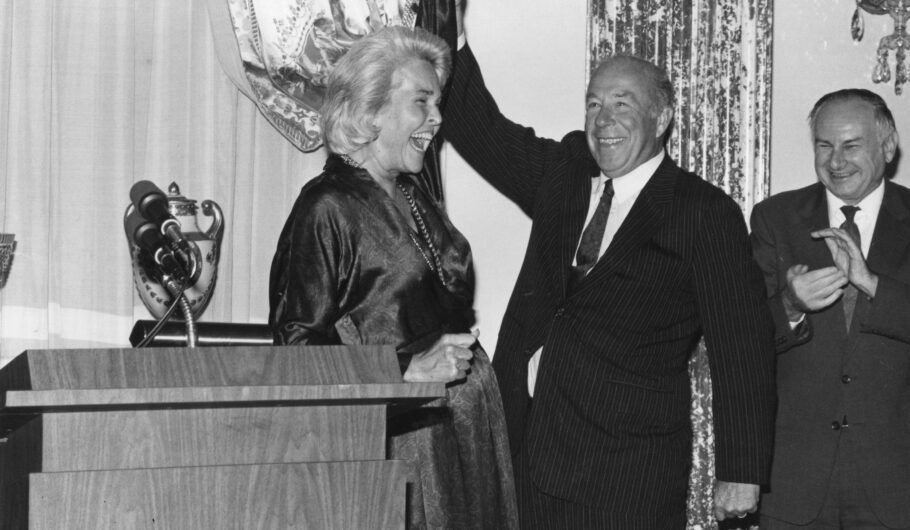
Melissa’s swearing-in ceremony for Mozambique was the most momentous of the four of her career. George Shultz spoke at the ceremony and made a point of holding up her hand as if she had won a boxing match. Years later, he wrote her a letter mentioning this ordeal.

The following text is from the ADST Oral History website.
“I don’t want to sound like the typical Pollyanna, but I really, truly believe that everything happens for a purpose. There is no doubt in my mind that the delay in my confirmation made me a heroine by the time I [got there].
No, there is no doubt that I was a heroine by the time I arrived. I mean, this is like Joan of Arc! Children were being named after me! The first little Melissa was born the day that the Senate voted.
The next Melissa was born the day that I presented credentials [to President Joaquim Chissano]. I kept getting pictures about little Melissas up and down Mozambique. I know of about four. Then I really didn’t answer them all. I wanted to discourage this, because there’s just so many little dresses that I could buy at this point.

But to get back to the point, had it not been for that, I would have been, I won’t say just like any ambassador, because the U.S. ambassador has a special place, certainly, in most places of the world, someone to be recognized and to be dealt with. All I was doing was upholding the administration’s policy; I was not doing anything else, but it turned me into a heroine and opened doors for me that–well, I have a lot of confidence; I think I would have opened them eventually, anyway, but, boy, did I get off to a running start! Now, please, please make it absolutely clear that I don’t want to recommend this for any other ambassador, and once is more than enough.”
Her time in Mozambique was one of the high points of her career.
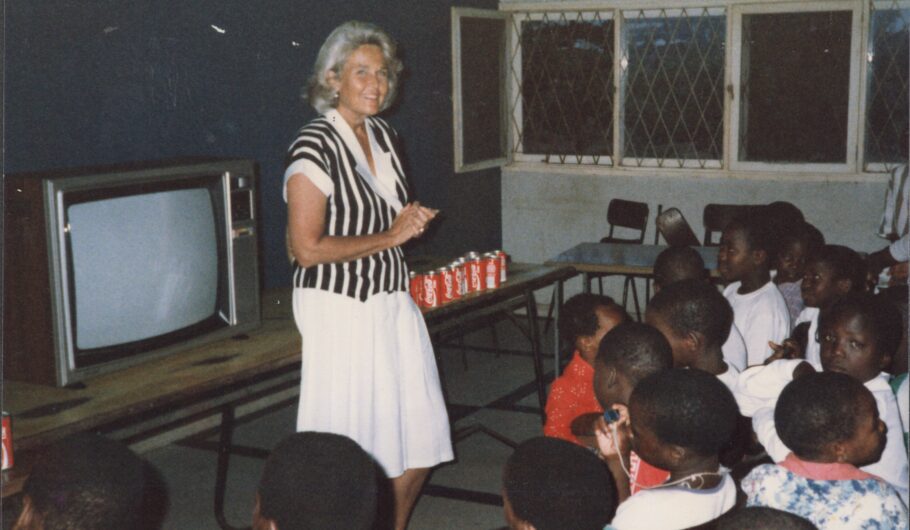
Mozambique war orphans
Shortly after Melissa arrived in Maputo in late 1987, she received a call from Marcelina Chissano, wife of Joaquim Chissano, President of Mozambique. “She asked me if I could come immediately to have tea with her and discuss a very urgent issue: about a dozen children had just been captured by Government troops firing weapons against the soldiers and fighting with the rebels. I rushed over right away, and the details were that the children’s ages ranged from about 11-14 and that they were now in prison, held as enemy combatants. More children had been captured and were expected to arrive in Maputo, the capital of Mozambique, shortly. We agreed that these children should not be kept in prison but rehabilitated. I promised to proceed to try and implement such a project,” recalled Melissa.
During this time, Renamo rebel guerrillas would attack remote villages and kill many of the adults, sometimes forcing the boys to commit atrocities and become soldiers. Many of these children fled the villages and became orphans, often having suffered mutilation. Many feared retribution by their neighbors and relatives. Most of them did not know the name of their village, much less its location. They did, however, know the names of some relatives.
She continued: “We in the United States Government are used to emergency programs, where we send food, medical supplies, tents and blankets. But ‘shrinks’ [psychologists]! That was something else. After discussions, the State Department approved a project which set up a hostel for the child soldiers and brought down to Mozambique a well-known child psychologist, Dr. Neil Boothby from Duke University. The idea was to set up a training model to train local people as there was not one trained psychologist in all of Mozambique. The training consisted of sizing up the children, spotting those that might be suffering from post-traumatic stress disorder, how to assess it, how to draw out the child, how to deal with it, often through psychodrama.” As the number of boys increased, the age range expanded to 8-16 years old.
She focused on getting funding from USAID, the US aid agency, for an initiative to reunite these orphans with their families. “She was front and center on this,” recalls Michael Ranneberger, who was the second-in-command at the US Embassy in Maputo.
Neil Boothby was seconded by Duke University to Save The Children (SCF), a non-governmental organization that played a key role in implementing this project. He recalls that “Melissa was able to call upon her personal relationships to make things happen. The first was with Julia Taft, who was the head of the US Office of Foreign Disaster Assistance (OFDA) at the time. A phone discussion resulted in the initial start-up funds ($80,000) for the Lhanguene initiative. It is the first time (and the only time) that OFDA funded a child soldier project.”
In addition, Boothby wrote that “Melissa and her husband knew Alan Parker and his wife who had the Oak Foundation. Alan Parker owned tax-free stores in airports. This was bridge funding, with USAID making substantial contributions thereafter. Senator Patrick Leahy created the Displaced Children and Orphan Funds (DCOF) and the Mozambique child soldier project was its first allocation. She had several discussions with Senator Leahy–and Terry Peal, the senior legislative assistant on the House foreign assistance committee at the time–visited Mozambique as part of this commitment. The visit sealed the ‘deal’ and set the tone for future DCOF allocations.”
The initiative centered around an orphanage in Maputo where these illiterate orphans were brought in the hopes that they could be identified and reunited with their families. At this center, called Lhanguene, the boys were given food, shelter and, when needed, help from a psychologist. To identify them, they were photographed and asked to talk into a cassette tape recorder about what their village was like and who their relatives and friends were. SCF worked in partnership with the Mozambican Department of Social Welfare, of the Ministry of Health. This government agency mobilized the Mozambican Woman’s Association, which existed in almost all villages and district capitals.
“The orphanage and the therapy for the kids were both heartbreaking and encouraging, but it was very tough to watch some of the reenactments of what caused the trauma,” recalls Beto Bedolfe, who was the USAID project officer for this initiative. Their “personal stories of being forced to murder their parents and worse were truly horrifying.”
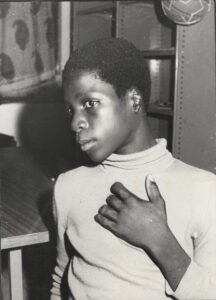
Then teams from SCF, the Mozambican government and the US Embassy would go to villages that government troops had recently recaptured from the rebels.
Carol Smetana, who worked at the US Embassy with Melissa, recalls a visit to a village. “I accompanied Melissa on one trip to film a gathering of dozens of villagers maybe several hours outside Maputo where Renamo had come and gone. We had huge posters with photos of the children that were displayed and passed around, hoping someone would recognize them. Imagine: most of them had never even seen photographs, so they had to process what they were seeing. One elderly woman recognized her grandson, maybe a five-year-old boy, and she came up to the table where Melissa and a couple other team members sat with the cassette tape recorder. They played the message from the grandson. I will never forget the series of expressions that quickly played across her wrinkled, timeworn face. At first shock and incomprehension at the first sounds coming out of that little machine, then realization that she was hearing human voices, followed by tears beginning to roll down her cheeks as she recognized her own grandson speaking.”
Boothby recalls a geopolitical angle of the project. Melissa negotiated a visit by Maureen Reagan, daughter of then President Ronald Reagan. “One of her first stops was the Lhanguene Center–we were literally just getting started. Maureen was ‘wide eyed’ as she listened to the Lhanguene boys talk about their experiences and met with Melissa and me to get a briefing. She returned to DC and met with her father, President Reagan, in the early morning ahead of an 11 AM scheduled meeting with Senator Jesse Helms. Helms wanted the President to support Renamo–Helms claimed it was a Christian entity that opposed communism. President Reagan, after listening to his daughter, told Helms ‘No.’ “
Melissa wrote that “By the time l left Mozambique, we had reunited 2,000 children – 2,000! – in a country at war, where people can’t read, where they have never even seen a photograph of a loved one. To the best of my knowledge, our project in 1988 was the first project in the world dealing with child soldiers, the practice of which today has become a more widespread problem. I am very proud of the work we did, but it was also some of the emotionally most draining work I ever did.”
In 1991, the US Foreign Service Journal carried an article about Melissa and these war orphans.
In 2004, Wray Herbert wrote an article for the Carter Center, founded by former US President Jimmy Carter, based on interviews with several of the boys who had grown up to be men. It may be found here.
For more information about this project, please see the ADST Oral History Website.
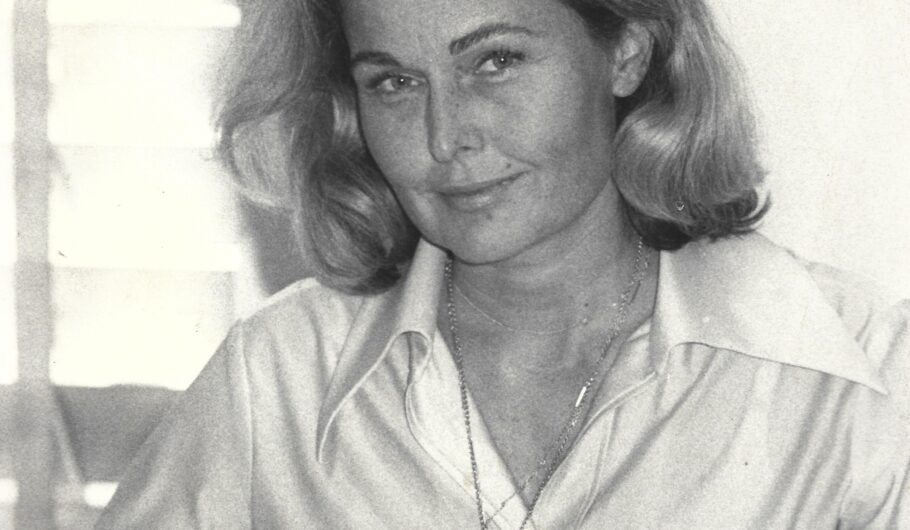
Rio de Janeiro 1975 to 1976
Brazil in the seventies was a booming economy and US companies wanted to get a piece of the action. Starting in 1975, Melissa’s role as Commercial Counselor at the US Consulate in Rio was to help promote trade between the two countries. She spoke at business events and came out in the press, as part of her work.
Most of her job was, of course, promoting US exports. Occasionally, data sheets about projects would cross her desk that had nothing to do with Brazil. One such case was a request for proposals by the government of Mauritania to build that country’s first major paved road, from the capital, Nouakchott, to a town 600 km east through the Sahara Desert. No American construction company was interested, and Mauritania did not want the project to go to a company from France, the former colonial power. Somebody at the Department of Commerce in Washington asked Melissa if a Brazilian company would be interested.
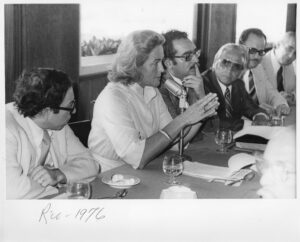
She passed the tip on to Paulo Tarso Flecha de Lima, the head of Brazilian export promotion at Itamaraty, the Foreign Ministry. He was very interested and within a few months Mendes Junior, then a big construction firm, landed one of Brazil’s first major building contract overseas. Legend has it that one of the challenges of building this road, called the Highway of Hope, was that there weren’t any rocks to grind up and make cement. The solution was to bring in seashells. Mendes Junior and other Brazilian construction heavyweights went on to build projects in Iraq, Angola, Ecuador and many other countries.
Inflation in Brazil was running at about 50% a year, and Melissa used this situation to teach her sons about economics. She started paying their monthly allowance in cruzeiros, the local currency. After several months, they complained that their allowance couldn’t buy the same amount and asked her to have it indexed to dollars.
She also warned her sons that the phone lines were probably being bugged by the Brazilian government, so she counseled them to be careful what to say.
Melissa took the family on one of their first real adventure trips, to Iguaçu Falls, Sete Quedas Falls (which now is a hydroelectric dam) and hitching a ride on a barge carrying soy up the Paraná River.
Her time in Rio was cut short when in 1976 she was named ambassador to two newly independent African countries. There was no high school in Guinea-Bissau or Cape Verde for her son Christopher, 15, who was attending the American school in Rio. After a debate about whether to go to high school in the US or in Spain, the family agreed to have him stay on in Rio. Melissa then found a family with whom he could live another year.

UN IMPACT Geneva 1982 to 1986
Humans made massive advances during the 20th century harnessing new knowledge and technology to control disabling diseases that had devastated humankind since time immemorial. Vaccines eradicated smallpox, among other scourges. Polio, Leprosy and tuberculosis could be controlled through immunization and treatment. Surgery could reverse visual and hearing loss. Safer water, sanitation, maternal and child care along with better nutrition could help halt the high rates of infant mortality.
During the International Decade of Disabled Persons, Sir John Wilson convened an international conference of experts in 1981 at Leeds Castle, in the UK, to explore opportunities and highlight action for the prevention of needless disability. Sir John had been blinded at age 12 and had worked in Britain and British colonies on helping the blind. He was then invited to present the recommendations of the conference, “Disability Prevention: the Global Challenge”, to the United Nations General Assembly in New York. As a result, several UN agencies (the World Health Organization – WHO, the UN Development Programme – UNDP and the UN Children’s Fund -Unicef) came together with a Resolution to form IMPACT: An International Initiative Against Avoidable Disability.
The idea was (and still is) to engage the private sector and non-governmental organizations in the prevention of disabilities, principally in developing countries.
Melissa, who had just spent three rough years heading up the UN in Uganda, was appointed in 1982 as the first International Director of the program, based at the WHO building in Geneva. She had a secretary, a travel budget and not much else in the way of UN support.
Sir John, who was 63 when he met Melissa, worked closely with the US diplomat. Their successful teamwork helped set up IMPACT Foundations in a dozen countries. “She was an inspiring presence, lending her dynamism, charm, passion and contacts as a tireless advocate to kickstart the organization. She travelled widely, engaging with like-minded people at every level, helping to establish IMPACT Foundations in south-east Asia, East Africa and in Europe,” recalls Sir John’s daughter Claire Hicks, who is Founding Director and Trustee of the UK IMPACT Foundation and, like Melissa, Ambassador to the International Federation of IMPACT Organizations.
Melissa summed up in five words the spirit of IMPACT when she described what would make the project eventually succeed: “Just local, committed, dedicated people”.
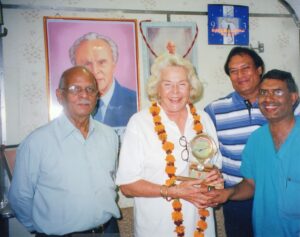
At the suggestion of Indian Prime Minister Indira Gandhi, India became the first country to set up an IMPACT Foundation. Sir John and Melissa found a ready partner in the Tata corporation, which seconded (lent) Zelma Lazarus to become the CEO of the www.impactindia.org in 1983. Melissa spoke at several events there, including at the Rotary Club in Mumbai.
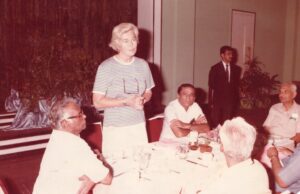
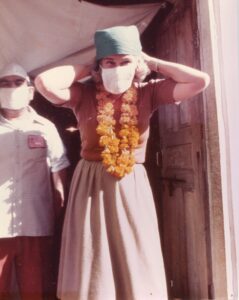
Practical action began in India with mass immunization campaigns in collaboration with the Government, mobile clinics, health education and training. Determined to “take the hospital to the people” in remote areas with marginalized communities, IMPACT India developed imaginative solutions. These included the Lifeline Express hospital train in India, The Boat of Life in Bangladesh, vehicles adapted to take medical personnel and equipment enabling eye, ear and orthopedic camps, training of local health workers and accessible health education.
In Thailand, Sir John and Melissa worked with Dr. Salyaveth Lekagul, who performed ear surgeries on hundreds of people.
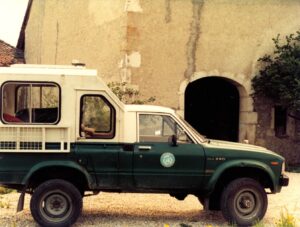
Melissa, Alfred and their younger son Gregory lived outside of Geneva. Their car was the same Toyota Hilux that they had driven from Africa, across Sudan and Egypt, to her new post.
Sir John and Melissa kept up their friendship after she left IMPACT in 1986. In 1996, when she was working in São Paulo, he sent her a fax updating her on the progress of IMPACT Foundations in several countries. Once, when they were having dinner, Sir John left a major chunk of his chocolate dessert on his plate. Melissa, who loved chocolate, knew that he didn’t know it was right in front of him. She was torn between her craving for chocolate and the guilt of stealing sweets from a blind man. Finally, she told him that he still had some delicious dessert.
To date, through IMPACT’s work, 50 million initiatives have provided accessible surgery for the restoration of sight, mobility or hearing, early identification and treatment of potentially disabling conditions, safe water and sanitation, health education and training and action for safer motherhood and child survival. A magnificent achievement of which Melissa was justly proud.
After she retired in 2001, Melissa remained closely involved and interested in the IMPACT program. She took on the role Ambassador to the International Federation of IMPACT Organizations for the rest of her life, from her home in the Canary Islands. In 2006, she and her husband Alfred attended a meeting in India of all the IMPACT Foundations.
UN IMPACT Geneva 1982 to 1986
Humans made massive advances during the 20th century harnessing new knowledge and technology to control disabling diseases that had devastated humankind since time immemorial. Vaccines eradicated smallpox, among other scourges. Polio, Leprosy and tuberculosis could be controlled through immunization and treatment. Surgery could reverse visual and hearing loss. Safer water, sanitation, maternal and child care along with better nutrition could help halt the high rates of infant mortality.
During the International Decade of Disabled Persons, Sir John Wilson convened an international conference of experts in 1981 at Leeds Castle, in the UK, to explore opportunities and highlight action for the prevention of needless disability. Sir John had been blinded at age 12 and had worked in Britain and British colonies on helping the blind. He was then invited to present the recommendations of the conference, “Disability Prevention: the Global Challenge”, to the United Nations General Assembly in New York. As a result, several UN agencies (the World Health Organization – WHO, the UN Development Programme – UNDP and the UN Children’s Fund -Unicef) came together with a Resolution to form IMPACT: An International Initiative Against Avoidable Disability.
The idea was (and still is) to engage the private sector and non-governmental organizations in the prevention of disabilities, principally in developing countries.
Melissa, who had just spent three rough years heading up the UN in Uganda, was appointed in 1982 as the first International Director of the program, based at the WHO building in Geneva. She had a secretary, a travel budget and not much else in the way of UN support.
Sir John, who was 63 when he met Melissa, worked closely with the US diplomat. Their successful teamwork helped set up IMPACT Foundations in a dozen countries. “She was an inspiring presence, lending her dynamism, charm, passion and contacts as a tireless advocate to kickstart the organization. She travelled widely, engaging with like-minded people at every level, helping to establish IMPACT Foundations in south-east Asia, East Africa and in Europe,” recalls Sir John’s daughter Claire Hicks, who is Founding Director and Trustee of the UK IMPACT Foundation and, like Melissa, Ambassador to the International Federation of IMPACT Organizations.
Melissa summed up in five words the spirit of IMPACT when she described what would make the project eventually succeed: “Just local, committed, dedicated people”.
At the suggestion of Indian Prime Minister Indira Gandhi, India became the first country to set up an IMPACT Foundation. Sir John and Melissa found a ready partner in the Tata corporation, which seconded (lent) Zelma Lazarus to become the CEO of the www.impactindia.org in 1983. Melissa spoke at several events there, including at the Rotary Club in Mumbai.
Practical action began in India with mass immunization campaigns in collaboration with the Government, mobile clinics, health education and training. Determined to “take the hospital to the people” in remote areas with marginalized communities, IMPACT India developed imaginative solutions. These included the Lifeline Express hospital train in India, The Boat of Life in Bangladesh, vehicles adapted to take medical personnel and equipment enabling eye, ear and orthopedic camps, training of local health workers and accessible health education.
In Thailand, Sir John and Melissa worked with Dr. Salyaveth Lekagul, who performed ear surgeries on hundreds of people.
Melissa, Alfred and their younger son Gregory lived outside of Geneva. Their car was the same Toyota Hilux that they had driven from Africa, across Sudan and Egypt, to her new post.
Sir John and Melissa kept up their friendship after she left IMPACT in 1986. In 1996, when she was working in São Paulo, he sent her a fax updating her on the progress of IMPACT Foundations in several countries. Once, when they were having dinner, Sir John left a major chunk of his chocolate dessert on his plate. Melissa, who loved chocolate, knew that he didn’t know it was right in front of him. She was torn between her craving for chocolate and the guilt of stealing sweets from a blind man. Finally, she told him that he still had some delicious dessert.
To date, through IMPACT’s work, 50 million initiatives have provided accessible surgery for the restoration of sight, mobility or hearing, early identification and treatment of potentially disabling conditions, safe water and sanitation, health education and training and action for safer motherhood and child survival. A magnificent achievement of which Melissa was justly proud.
After she retired in 2001, Melissa remained closely involved and interested in the IMPACT program. She took on the role Ambassador to the International Federation of IMPACT Organizations for the rest of her life, from her home in the Canary Islands. In 2006, she and her husband Alfred attended a meeting in India of all the IMPACT Foundations.